
A plain-language guide
How Ontario’s Tire Recycling System Works
Ontario’s used-tire system connects producers, PROs, collection sites, haulers, processors and the regulator. This guide explains who does what, how tires get a second life, and who to contact when questions come up.
From eTracks. As of November 2026.
The road to recovery
In Ontario, the companies that supply tires are responsible for what happens to them at the end of their life. Here’s the journey a used tire takes, from the moment it comes off a vehicle to the proof that it was recovered.
-

 A producer supplies tiresBrand owners, importers and vehicle makers supply new tires in Ontario. They’re responsible for those tires at end of life.
-

 Tires wear outDrivers replace them at a shop or dealership.
-
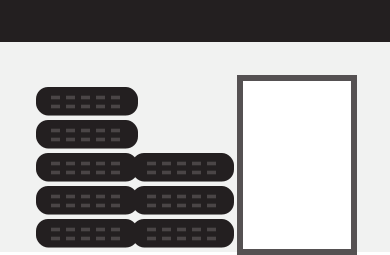
 Drop-offUsed tires go to a collection site, free of charge.
-
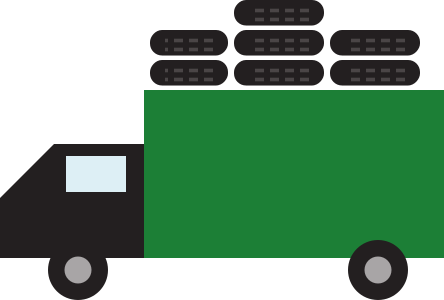
 PickupA registered hauler collects the tires.
-

 RecoveryTires are reused, retreaded, or recycled into rubber and steel.
-

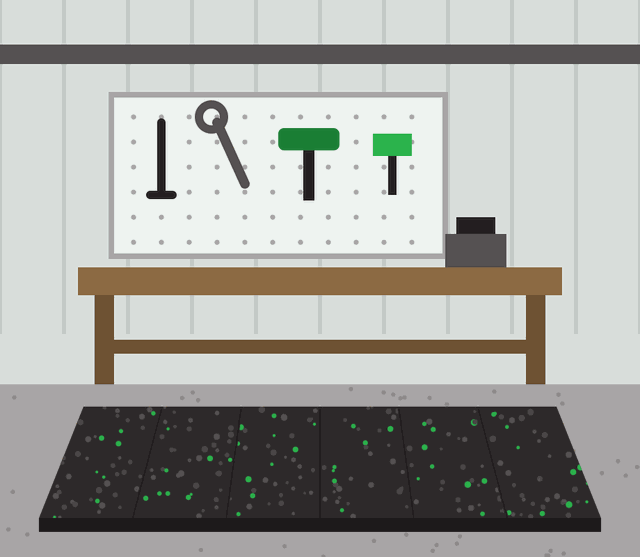
 New productsMats, floors, playground surfaces and roads, like this one.
-

 ProofRecords show the tires were recovered.
-
 Burned for fuel or sent to landfill? Doesn’t count.

Burned for fuel or sent to landfill? Doesn’t count.
Three things to remember
- Producers are responsible for the tires they supply, and they pay for the system.
- 80% of their average supply, by weight, must be reused, retreaded or recycled.
- It only counts when records prove it. Burning, fuel use, landfill and stockpiling never count.
What is a producer’s responsibility?
Ontario’s tire recycling system starts with the businesses that supply tires to the province. These businesses, called producers, are responsible for funding and arranging the collection and recovery of used tires.
For the tires they supply in Ontario, producers must make sure people have free places to drop off used tires, and that a set share of tires, by weight, is actually reused, retreaded or recycled.
Collection
Giving people a place to bring used tires
Producers must provide a network of collection sites where anyone can drop off used tires free of charge, such as tire retailers, repair shops, dealerships and municipal depots.
Management
Making sure tires get a second life
Collection alone doesn’t meet the obligation. Producers must make sure a set share of tires, by weight, is reused, retreaded or recycled, and that records prove it.
How big is a producer’s share?
A producer’s management requirement is based on the weight of tires it supplies into Ontario, using a three-year average. It’s measured in tonnes, not tire counts or by collecting specific brands of tires.
Example based on the current requirement, as of 2026. The percentage is set by regulation and can change, and large off-the-road tires (over 700 kg) have their own requirement.
Where a PRO comes in
Producers can set up their own collection and recovery systems, or hire a producer responsibility organization (PRO) to do the work for them. Most producers choose a PRO.
eTracks is a not-for-profit PRO, created in 2017 by the Tire and Rubber Association of Canada (TRAC). Its compliance service covers:
- Collection network
- Hauling and recovery
- Tracking
- Reporting
Producers are still accountable. A PRO helps producers meet their obligations, but the producer still holds the legal responsibility.
Check your understanding: does it count?
Tires picked up from a dealership, now waiting in a storage yard
Not yet. Storage isn’t recovery.
Tires shredded and used in a playground surface
Counts. Recycled into a new product.
Tires burned as fuel at an industrial plant
Doesn’t count. Burning for fuel is excluded.
A truck tire retreaded and back on the road
Counts. The casing keeps working.
The short version
Producers are responsible for two things: free places for people to drop off tires, and proven recovery of a set share of what they supply, by weight (currently 80%). A PRO like eTracks can do the work for them, but the responsibility stays with the producer.
What happens to the tires?
A used tire left at a repair shop can take several paths. It might go back on the road through reuse or retreading. Or its materials might become a hockey rink floor, a mat for a barn or part of a road.
Reused
A tire that’s still safe and suitable goes back into service. Reuse extends its life before its materials need to be recycled.
Retreaded
A sound casing gets a new tread, so it keeps working. This preserves the value of a large part of the original tire.
Recycled
When a tire can’t go back into service, it’s processed into rubber and steel used to make new products.
Recycling: recovering material from a scrap tire

- Rubber
- Steel
- Textile fibre
Tires that can’t be reused or retreaded are processed to recover their materials. A tire is an engineered combination of rubber, steel and textile fibre. Recovering those materials takes several stages:
- Shred and grindBreak tires into smaller pieces
- SeparateMagnets remove steel; other systems remove fibre and debris
- RefineGrind and clean to produce sizes customers need
What’s in a tire, and where it goes
A typical passenger tire, by weightSource: Rubber Manufacturers Association (now the U.S. Tire Manufacturers Association). Figures vary by tire type.
Recovered materials reach an end market
End markets give recovered materials somewhere useful to go. You’ll find recovered tire rubber all around you. Established uses include:
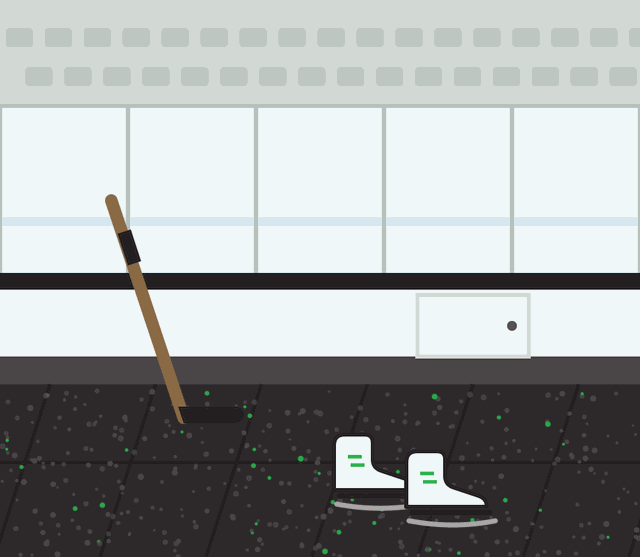 Sports and fitnessHockey rink flooring, gym floors and sports surfaces
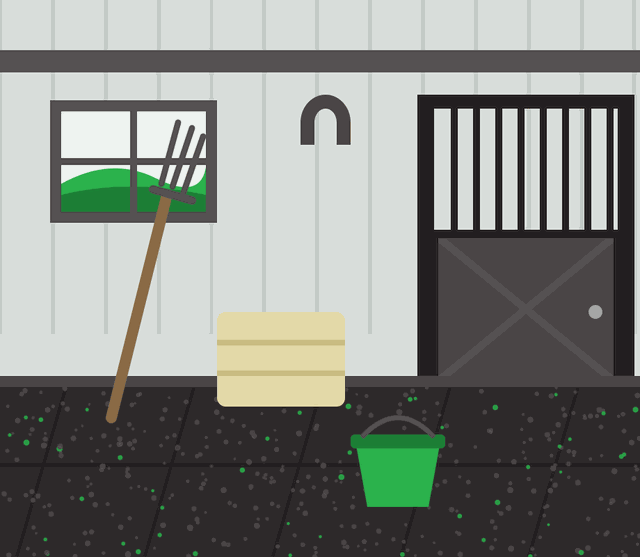 AgricultureLivestock and equestrian matting
 Commercial and industrialAnti-fatigue mats and durable flooring
 Landscaping and constructionPavers, edging and other manufactured products
 RoadsCrumb rubber used in rubber-modified asphalt
The short version
Used tires move through five steps: drop-off, pickup, recovery, end market and records. Reuse and retreading come first, and recycling turns the rest into products from barn mats to roads. Without the records, none of it counts.
What does that work accomplish?
The collection, transportation and recovery that producers fund help turn used tires into something useful again. Used tires in Ontario now have somewhere useful to go.
Results from eTracks’ network
2019 to 2025tonnes of used tires collected
tonnes made into new products
These figures describe different stages of the journey. Together, they mean roughly 87 tonnes were made into new products for every 100 tonnes collected.
Source: eTracks.ca, combined tire recycling data from 2019 to 2025.
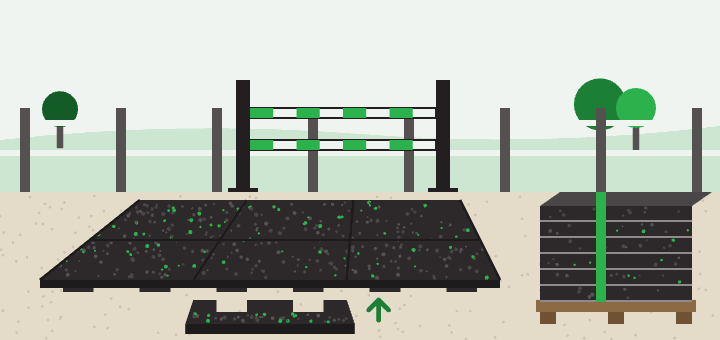
Partner story
From tire to barn floor
North West Rubber, an eTracks manufacturing partner, turns recovered tire rubber into livestock mats, equestrian flooring and sports flooring.
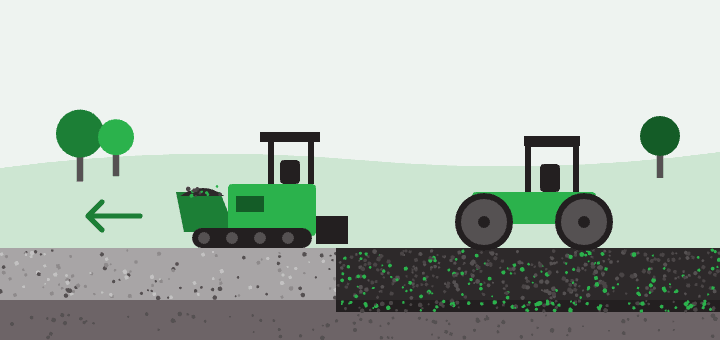
Partner story
From tire to road
CRM Rubber, an eTracks partner with a plant in Brantford, Ontario produces crumb rubber that can be added to asphalt.
Work across the supply chain
- About 6,500
- active collection sites in eTracks’ network
- 50+
- Ontario hauling companies
- 8
- Ontario tire processors
- Hundreds
- of Ontarians employed across the network
Source: eTracks.ca, October 2026. Figures for the eTracks network.
The short version
Ontario went from tire stockpiles to a system that puts used tires to work. In eTracks’ network, about 87 of every 100 tonnes collected became new products. The next step is keeping those materials working even longer, and one day maybe back into new tires.
What’s changing
Ontario reviews and refines the rules over time. As of October 2026:
A higher target
Starting with 2026, producers must show that 80% of their average supply, by weight, was reused, retreaded or recycled, up from 65%.
More drop-off sites
The minimum number of collection sites required across Ontario grows from about 4,300 to about 6,500 in 2027, with 10% of the new sites in Northern Ontario.
More transparency
PROs file a one-time report on their collection and management costs in December 2026, then include costs in their annual reports.
Common questions
If a producer’s tires were collected, is the producer covered?
Not quite. A pickup alone doesn’t show that tires were reused, retreaded or recycled. A tire counts toward a producer’s obligation once it has been recovered, and the records prove it.
If a producer hires a PRO, does the responsibility become the PRO’s?
No. A PRO does the work on the producer’s behalf, but the legal obligation stays with the producer. It’s worth understanding what a PRO covers, how it tracks tires and how it supports audits.
Do producers have to recover their own branded tires?
No. A producer’s obligation is tied to how much it supplies into Ontario, not the specific tires it sold. A used tire of any brand recovered through its PRO’s network can count, as long as records show the recovery took place.
What happens if a producer falls short?
RPRA can take action. It can issue administrative penalties to producers that don’t meet their requirements. Producers can still avoid them by making up the shortfall, which is RPRA’s preferred outcome.
Can anyone drop off used tires, even from home?
Yes. Collection sites accept up to 10 used tires a day from anyone, free of charge, including tires still on their rims. Retail sites take tires similar in size to the ones they sell.
Where does the recycling fee on a receipt come from?
There isn’t a single fee. Each PRO sets its own prices, each producer decides whether to pass some or all of that cost on, and each retailer decides how it’s shown. It isn’t a government tax or an RPRA fee. Drop-off is free for everyone, whether or not you paid a fee when you bought the tires.
The full guide covers these in more detail, along with reporting dates, audits and a glossary.
Get the full guide
Every section in detail, with worked examples, reporting dates, questions to ask any PRO and a glossary of key terms.
This page explains Ontario’s tire system in plain language for general information. It isn’t legal advice. Requirements can change, so for official requirements, consult the Tires Regulation and RPRA. As of November 2026.