The Recycling Journey Doesn’t End at Collection
Used tires shouldn’t end up in a ditch, illegal dump site, or landfill. These tires can and should be recycled. But here’s something that often gets overlooked: Collecting a tire isn’t the same as recycling it.
Collection is just the first step. A tire’s path from end-of-life to new life involves several important stages, including transportation, processing, manufacturing, and ultimately a new beneficial use. Without that final step, the recycling process remains incomplete.
That’s where end markets come in. 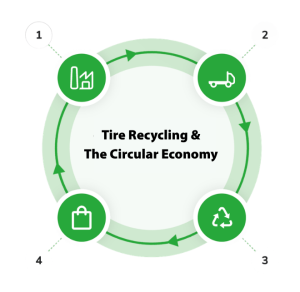
What Are End Markets?
An end market is the final destination for end-of-life tires. For end-of-life tires, end markets are the products and applications that utilize the materials recovered during the recycling process. They create demand for recycled materials and ensure those materials continue delivering value long after a tire’s original purpose has ended.
Without end markets, used tires could still be collected and processed, but the recovered materials would have nowhere to go. Simply put, end markets are what make the circular economy work.
After a Tire Is Collected
A tire isn’t truly recycled just because it’s been shredded. It can become part of something useful again. That simple idea sits at the heart of effective tire recycling.
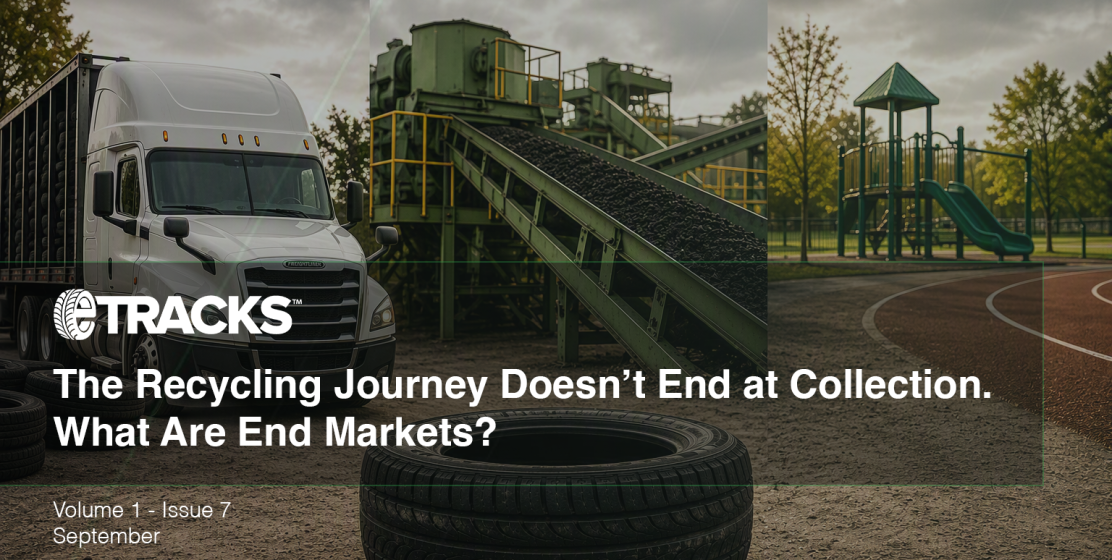
After collection, tires are transported to processing facilities where they are separated into their primary components, including rubber, steel, and fibre. Facilities then clean and refine the rubber into various forms, including crumb rubber, which can be used as a raw material in new products.
Once processed, these recovered materials can be used to manufacture a wide variety of products and applications. Many Ontarians interact with products made from recycled tires every day without even realizing it.
Rubber, steel, and fibre can be returned to productive use through a range of manufacturing and industrial processes. These materials can be found in:
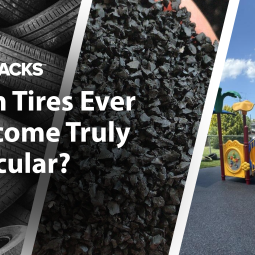
- Sports, fitness, and playground surfaces
- Livestock, agricultural, and industrial flooring
- Landscaping and outdoor products such as pavers, edging, and decking
- Consumer and commercial flooring products
- Construction and infrastructure materials
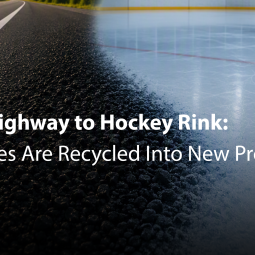
- Rubber-modified asphalt used in road construction
- Recycled rubber feedstock for manufacturing new products
These applications demonstrate how end-of-life tires can be transformed into practical, durable solutions that support communities across the province.
Together, these applications support steady demand for recovered materials, enhance Ontario’s resource recovery system, and encourage a more circular economy.
A Common Misconception: Recycled Means Lower Quality
Some people assume products made from recycled materials are less durable or effective than those made from virgin materials. In many cases, the opposite is true.
Tire rubber is known for its durability, flexibility, resilience, and shock-absorbing properties. These performance characteristics make it well suited for applications that must withstand heavy use and changing environmental conditions.
From playgrounds and sports facilities to agricultural products and infrastructure projects, recycled tire materials are often selected because they perform well, not just because they are recycled.
As manufacturers continue to develop practical new applications for recovered materials, recycled tire products are proving that performance and sustainability can go hand in hand.
Looking Beyond the Tire
Markets for recovered materials create the foundation for a successful resource recovery system.
A high-performing tire recycling system doesn’t end with collection or processing. It depends on creating meaningful, lasting uses for recovered materials. eTracks’ mission is to support a healthy tire recycling system that enables end-of-life tires to be collected and repurposed into new, useful products.
Most people consider recycling as the collection process, but the more crucial aspect is what occurs afterward. Every tire collected through eTracks’ system is transformed into a diverse range of valuable end-use products, demonstrating the important role end markets play in Ontario’s resource recovery system.
When a recycled tire is used in a playground surface, agricultural flooring, landscaping product, construction material, or roadway, it keeps valuable resources in use and prevents waste from ending up in landfills. Because collection starts the recycling journey. End markets complete it.